 New Parent Lab
A kindergarten-ready child needs 5 skills the alphabet can't teach
The alphabet is not what kindergarten teachers watch for. Five social and self-help skills make the first month easier, and sleep sits underneath all of them.
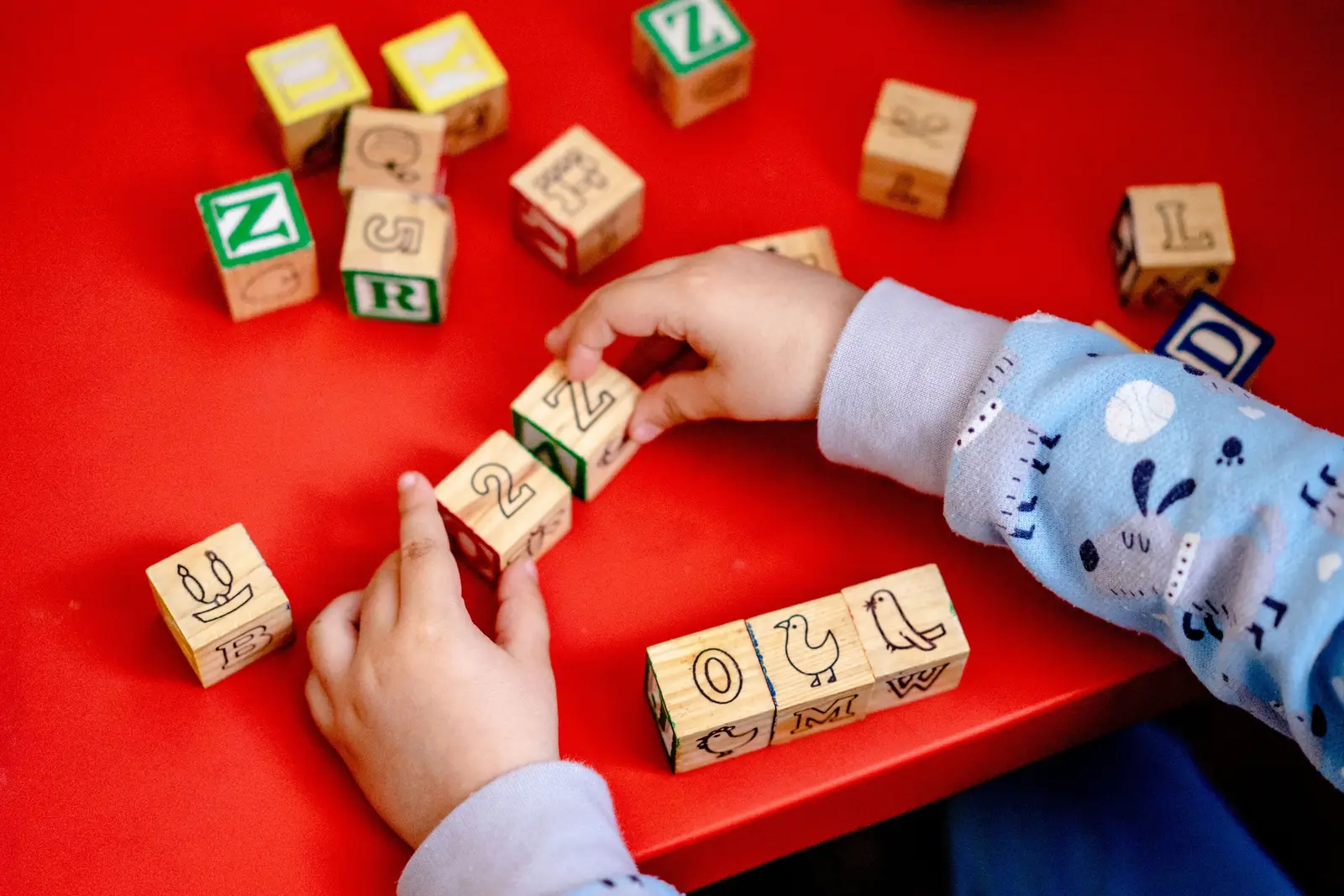
The American Academy of Pediatrics defines kindergarten readiness across four domains: physical, social-emotional, language and cognition. Two are academic. The other two decide how the first six weeks go, which is why a child who can recite the alphabet can still spend October upset at drop-off.
Dr. Lauren Loquasto, senior vice president and chief academic officer at The Goddard School, told Romper that a child who knows every letter but can't manage frustration, follow a routine, communicate a need or recover when something goes wrong 'may have a much harder transition to kindergarten.' Vocabulary, letter sounds and number sense still count. Loquasto calls them 'foundational skills, not finish lines.'
The mismatch is easy to explain. Letters are visible. You can hear your child count to 30 and see their name on paper, so those become the scoreboard. Frustration tolerance and help-seeking stay invisible until the day they aren't, usually in a room with 20 other children and one adult who is already zipping a coat.
How to spot readiness on an ordinary afternoon
You don't need a test. Watch a normal afternoon and note four things. Does your child recover after a small disappointment, or does the rest of the afternoon collapse? Can they follow a two-step instruction like 'shoes on, then bag by the door'? Do they tell you when something is wrong, or wait to be noticed? Can they get a drink or a snack with what is in reach?
A hungry or tired five-year-old will fail all four, so check sleep and food before you draw conclusions.
The five skills worth practising
Each of these can be practised at home over a few ordinary weeks.
- Taking no and waiting. Being told to stop, wait or share is the most common frustration of a school day, and it happens dozens of times before lunch.
- Asking an adult for help. Practise the words at home so they're ready on the day you aren't in the building.
- Dressing with less help. The coat, the shoes, the backpack. Start with the coat, since it comes off and on several times a day.
- Opening a lunch container and finding their own belongings. Label the folder and the water bottle, then let your child be the one who locates them.
- Recovering after a mistake. A dropped tray, a lost turn, a wrong answer. A child who can reset gets back into the day instead of losing it.
Practising self-help at home
The National Association for the Education of Young Children suggests families practise self-help skills at home in the weeks before school starts: dressing with less help, keeping track of a backpack and lunchbox, and asking an adult for help when it's needed.
The classroom version of this is unglamorous. Twenty children, one adult, and a coat that needs zipping. A child who can hang up a coat or open a lunch box settles in faster, and the adult gets a free hand for the next child.
Sleep and the morning that follows
The Sleep Foundation recommends easing into the school schedule over a couple of weeks. A single big change the night before tends not to work. Move bedtime and wake-up time earlier in small steps, then hold bedtime steady once term starts.
Rehearse the morning itself. Wake, dress, breakfast, shoes, door. Run the sequence twice in the week before school so it's boring by day one. If the school offers a classroom visit, or photos of the room and the daily schedule, go through them together.
A five-year-old on a short night has less patience for every skill listed above, and September is full of mornings that start badly.
What the school's readiness assessment can and cannot tell you
Many states require districts to run kindergarten readiness assessments at the start of the year, covering early literacy, early math, language, and social and emotional development. Teachers told the U.S. Government Accountability Office that giving several assessments at once is time-consuming and competes with getting to know the class. Some questioned their accuracy and how much the results help with teaching.
Some schools rearranged their schedules at the start of the year to fit the testing in, teachers said. That tells you something about how much classroom time the assessments take.
There's a smaller snag. Some assessments run on a tablet, and a child who hasn't used one much can score lower on device familiarity than on knowledge. The GAO also found that little is known about kindergarten readiness nationwide, which makes any single score a thin signal. Ask the teacher what the result means for your child.
Letters, numbers and the pull of the checklist
Counting to 30 and writing a name are good things to be able to do. They become a problem when they turn into the whole checklist, because a child can tick every box and still find the first month hard.
A backward S on the name card won't decide how the year goes. Not being able to tell an adult they need the toilet probably will, so practise that sentence this week.
The NAEYC also publishes guidance on what a high-quality kindergarten program looks like. Reading it before you tour a school is a better use of an evening than another readiness checklist.
The last few weeks before school
Move bedtime earlier in steps. Practise the coat, the shoes and the lunch container. Walk the route to the bus stop or the school gate. Talk through what the day will look like, including the part where you leave and the part where you come back.
Then ask the school two questions: what it screens for in the first weeks, and what happens to the results. Ask who to speak to if the teacher raises something in the first month.
Frequently asked questions
- Does knowing the alphabet make a child kindergarten ready?
- No, not on its own. Letter sounds and number sense count, but the AAP splits readiness into physical, social-emotional, language and cognitive domains. A child who knows every letter but can't manage frustration, follow a routine or ask for help may find the transition harder, according to Dr. Lauren Loquasto of The Goddard School.
- What should my child be able to do before kindergarten starts?
- Five things carry the most weight: take no without falling apart, ask an adult for help, dress with less help, open their own lunch container and keep track of their belongings, and recover from a small mistake. The National Association for the Education of Young Children suggests practising these at home in the weeks before school.
- How early should bedtime shift before school starts?
- Start a couple of weeks out and move it in small steps. The Sleep Foundation recommends easing into the school schedule rather than making one big change the night before, then keeping bedtime consistent once term begins.
- Should I worry about a low score on a kindergarten readiness assessment?
- Not much. Teachers told the GAO that multiple assessments at the start of the year are time-consuming, and some questioned their accuracy and usefulness. Device-based tests can reflect unfamiliarity with a tablet. Ask the teacher what the score means for your child specifically.
More guides for you

How to set boundaries with kids: one sentence and an action
A boundary is a decision about your own behaviour, not an instruction your child has to follow. Here's how to say one in a sentence and hold it when the tears start.

UK vs US raising kids cost: birth costs $18,865 without insurance
The UK is cheaper at birth and for health care, but childcare, leave and salaries change the math. Here is what the averages compare, and where the US bill lands.

Measles elimination status lost: what 5,400 US cases mean for you
PAHO revoked US measles elimination status on November 17, 2026, after a year of continuous spread. What the 5,400 cases and 10 deaths mean for parents, and who should check their MMR record.